
Sources for Rancho Cucamonga Previous Residents
A single address rarely has one complete history. The source table shows which record sets can carry the backward trail and where a researcher can reach them. Years describe verified coverage or the limits documented in the research, not a guarantee that every volume or name survives.
| Source | Years It Covers | Where Held | What It Shows |
|---|---|---|---|
| Recorder online index | 1925–present advertised; chain guide uses 1958 operational cutoff | County ARC web, office, microfilm | Grantor, grantee, instrument, date, legal description |
| Assessor valuation rolls | 1978–present published | County ARC Property Information | Assessed owner, values, parcel and transfer snapshots |
| City permits and documents | City era; record series varies | Online Permit Center, Document Center, CPRA | Address-dated work, applicants, contractors, civic names |
| Census schedules | 1850–1950 public | NARA, FamilySearch, libraries | Household members, ages, occupation, birthplace, later address |
| Directories and newspapers | Verified local years vary; May 1962 telephone volume | Library, Library of Congress, regional archives | Address, spouse, occupation, notices, social and obituary clues |
| Probate and obituaries | Case or publication dependent | Superior Court, newspapers, archives | Heirs, death, residence clues, family relationships |
Ownership provides the spine. Historical collections and family records provide the people layer. Neither should be used as a substitute for the other.
Note: Deeds establish transfers, while directories and census schedules are needed to test who occupied an address.
Walk the Rancho Cucamonga Resident Deed Chain
The recorder’s official property-research method begins with the current assessed owner and legal description. The address or APN gets the researcher to the parcel; the legal wording connects one deed to the next. A grantor is the party conveying an interest. A grantee receives it. Chain of title means the linked sequence of recorded transfers, not a list of every person who ever occupied a building.
- Resolve the exact APN, current assessed owner, situs, and legal description through County Parcel Access or the monthly owner file.
- Search the recorder for the current owner as grantee and narrow by likely date or document type.
- Inspect or order the deed, recording date, document number, grantor, grantee, and legal description.
- Search the seller as an earlier grantee and repeat the chain backward, using spelling variants and both roles.
- When the online trail ends, move to Hall of Records books or microfilm and use the legal description rather than address alone.
- Pair each transfer with a directory, census, permit, probate, or obituary before describing a person as a past resident.
The San Bernardino County chain-of-title guide explains the county’s bridge from parcel to deed. A deed can show a sale, trust, lien, release, or other instrument. It cannot prove that the owner lived at the parcel during the entire ownership period.
Note: The legal description is the chain’s anchor when an address changes spelling, numbering, or postal identity.
- Grantor
- The party conveying an interest in the recorded instrument.
- Grantee
- The party receiving an interest in that instrument.
- Chain of title
- A linked sequence of ownership transfers and legal descriptions.
- Legal description
- The tract, lot, section, or other recorded wording that identifies land beyond a postal address.
Before the Rancho Cucamonga 1925 Record Index
The general recorder page advertises an index from 1925 to the present. The dedicated chain guide says online grantor-grantee research is available from 1958 and directs pre-1958 work to decade-arranged microfilm at the main San Bernardino office. The Secretary of State’s Public Records Act requester guidance is a useful companion when an older municipal file must be requested. This is a practical cutoff distinction, not a reason to abandon the earlier trail.
For older work, call the recorder before travel at (909) 387-8306. The Hall of Records is at 222 W. Hospitality Lane, First Floor, San Bernardino. Appointments are strongly encouraged. The web index is a catalog; document images are viewed at the Hall of Records or High Desert Government Center, or ordered. Mail requests generally return in one to two weeks after receipt.
The recorder also warns that it cannot search ownership by street address. Start with the assessor’s APN and current owner, then carry the legal description into books or microfilm. A street-only search can miss the older chain even when the deed survives.
The 1978 Rancho Cucamonga Roll Starting Point
Assessor historical assessment valuations begin in 1978, close to the city’s 1977 incorporation. That makes the roll a useful later-era starting point for previous residents research. It can supply assessed owner, values, parcel characteristics, transfer information, and mailing versus situs distinctions. It is a tax snapshot, not a household roll and not a substitute for the recorder’s legal instrument.
Use the Assessor Property Information portal to find the parcel and review available roll history. Compare a 1978-era owner clue with deeds, city permits, directory entries, and census schedules. A mailing address may point outside the parcel, and a change in assessed owner may reflect a transfer without showing who occupied the house.
Keep the APN, legal description, source date, and field label in the research note. That makes later deed and directory comparisons much safer.
Note: Assessment history supplies dated owner snapshots but cannot substitute for a recorded deed or household source.
Pair Deeds with Rancho Cucamonga Directories
The city directory layer answers a different question from the deed chain. A directory can show a household or address at a point in time. The verified May 1962 Pomona-area telephone directory covers Alta Loma, Cucamonga, and Etiwanda, making those pre-1977 labels essential. The library can confirm local newspapers, yearbooks, exact directory volumes, and reverse listings.
Search a known address backward one volume at a time. Copy the name, spouse, occupation, and address exactly. Pair each entry with the nearest census schedule. Use a deed for ownership, a permit for a construction event, and a newspaper or obituary for movement or death. If a directory uses North Cucamonga, Alta Loma, or Etiwanda, retain that label rather than forcing the modern city name.
The full historical collection method lives in the Rancho Cucamonga city directory page. This previous-residents page uses the collection to trace one address, not to restate every shelf detail.
The process is simple in form: address → parcel → owner → deed → directory or census household → obituary or probate clue. Each arrow needs its own citation.
Note: A previous-residents search should cite the volume, page, address format, and source date before moving backward.
Rancho Cucamonga Permit Records Separate Ownership
City permits date physical work at an address. Building & Safety routes electronic applications and plans through the Rancho Cucamonga Online Permit Center, with kiosks near the Planning counter. The public record may name a permit, site address, applicant, architect, contractor, project status, inspection, reroofing, addition, demolition, or rebuild.
Use the Building & Safety entry page and the City Document Center. If the file is not posted, describe the existing address record and date span through the city’s CPRA request path. A permit participant is not necessarily an owner or previous resident. It is evidence of a change to the property.
Permits can explain why a directory address looks different, why a structure disappears from a later map, or why a legal description persists while the building changes. They cannot fill a missing household entry by themselves.
Rancho Cucamonga Probate Records Close the Trail
When a prior owner dies, probate filings can identify heirs, representatives, and property interests. An obituary can add family relationships, a community, organization, or former residence. These sources can close a gap between a deed and a directory, especially when a household moved or a surname changed.
Search the Superior Court with a name, date range, and case type, remembering that probate records may route to a different district and remote access may be narrower than courthouse access. Use newspaper and library archives for obituaries. The county museum’s Rains House history demonstrates a rich address trail through a land-grant family, continued residence, remarriage, sheriff’s sale, later private ownership, restoration, and county purchase. For a vital-record clue, CDPH’s 2026 fee schedule and diacritical-marks guidance help date and interpret a copy request.
Family-history sources are clues until the underlying record is checked. A named heir may not have lived at the property, and an obituary’s residence may reflect a later date.
Rancho Cucamonga Names Break Past Resident Searches
Rancho Cucamonga’s current name is younger than many of the records being traced. Search Alta Loma, Cucamonga, North Cucamonga, Etiwanda, Ontario, Upland, and Pomona-area references. The city formed from three communities in 1977, while older directories and newspapers kept their own geographic terms. A failed modern-name search can be a label mismatch.
PlanRC records the 1839 land grant, rail and packing-house development, Pacific Electric service to Etiwanda in 1914, postwar tract growth, and the 1977 incorporation. In 2020 the city annexed about 4,085 acres in Etiwanda Heights. These dates help set a jurisdiction and place-name window for a deed, permit, directory, or newspaper.
Write the source’s place label next to the modern address. That preserves the historical trail instead of replacing it.
Rancho Cucamonga Safe at Home Records
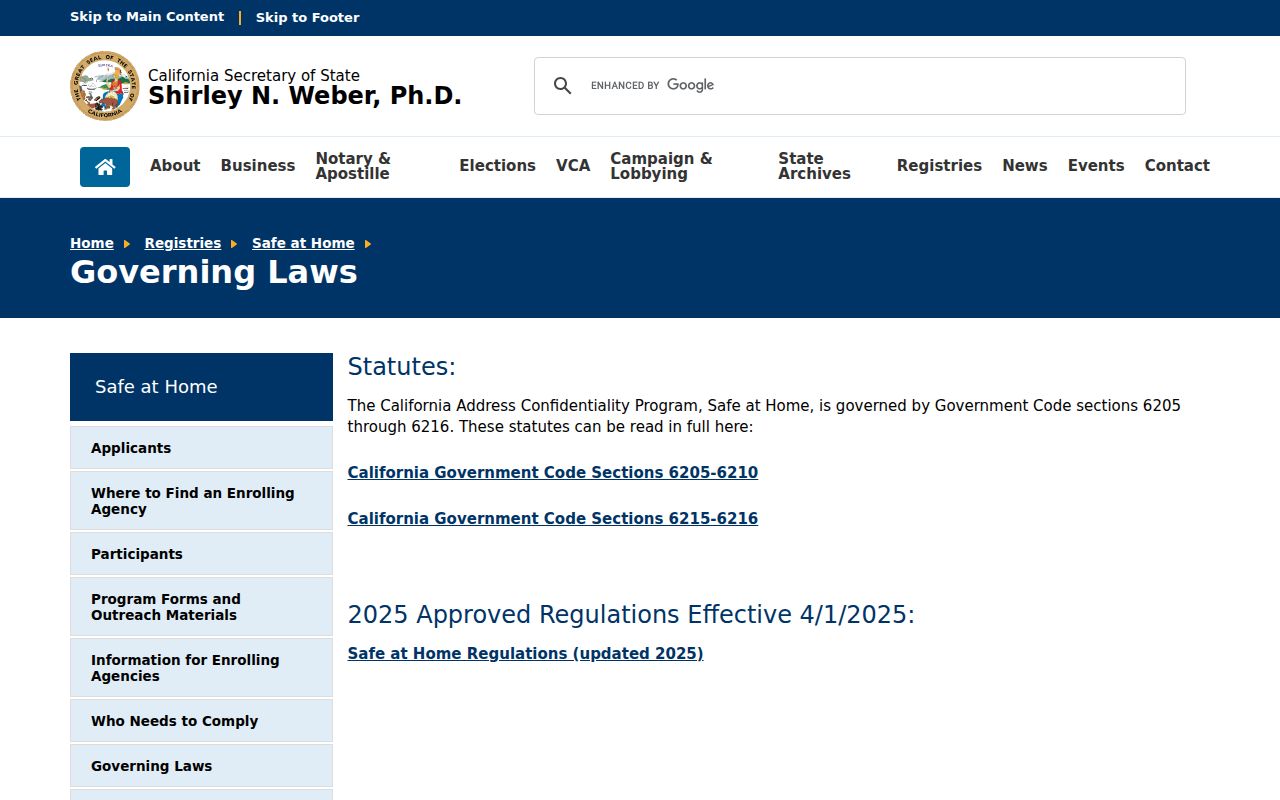
Some previous residents will not appear in a public address search because California protects them. Safe at Home, under Government Code §§6205–6216, provides a substitute mailing address and confidential voter registration for qualifying survivors and other protected categories. A missing address is not evidence that a person never lived at the property.
The image below comes from the Safe at Home governing-law page, which explains the statutory framework and privacy boundary in a previous-residents search.
Do not work around a protected record. Use public historical sources for a lawful family-history question and ask the custodian what access path remains available.
Note: A protected non-result is a privacy outcome, not evidence that the historical trail is empty.
Rancho Cucamonga Sanborn Records Must Be Verified
Sanborn fire-insurance maps can show building footprints, uses, materials, and old street or numbering clues. The research did not locate an official Rancho Cucamonga-specific year list. Treat a catalog hit as a lead until the library or archive confirms the community and date. Do not claim that a particular house or year appears without inspecting the actual map.
When a Sanborn map exists, pair it with the deed’s legal description, a city permit, a directory address, and the parcel map. A map may show a structure without naming occupants. A later permit may explain a rebuild. An older directory may use a place label that the modern assessor no longer displays.
The best previous-residents trail is layered: deed chain for transfers, roll for later assessment snapshots, directories and census for households, permits for physical change, and probate or obituary for family movement.