
Search the Rancho Cucamonga Residents Directory
A useful search begins with a fact that can be tested. An address can lead to a parcel, an APN, an assessed owner, and then a recorded instrument. A full name can lead to a court party, a professional license, a business filing, or an obituary clue. None of those results alone proves who lives at a home. The county assessor describes property; the recorder indexes parties to documents; the courts describe cases; and California election tools protect voter data.
For a current address question, start with the San Bernardino County Assessor property-information portal. For a deed trail, move from the APN or assessed owner to the recorder’s grantor-grantee index. For one person, use independent dates and identifiers before treating two records as the same person. An older household may require Alta Loma, Cucamonga, North Cucamonga, or Etiwanda as the search label because those communities were joined in 1977.
- Write down the exact clue: name, address, approximate year, community label, or event.
- Use Parcel Access or the assessor roll to identify a parcel, owner name, or situs address.
- Search the recorder by party, document type, date, and both grantor and grantee roles.
- Use the court, vital, license, business, or library source that matches the question.
- Save the source date and verify the result with the agency that holds the record.
That sequence keeps the Rancho Cucamonga residents directory grounded in records that answer a defined question instead of a loose name match.
Note: The assessor’s assessed-owner field is a parcel clue, not proof that every person at the situs lives there.
Rancho Cucamonga Resident Records Offices
Rancho Cucamonga is a city within San Bernardino County, not a separate county-records jurisdiction. The city clerk keeps municipal legislative and administrative material. The county Assessor-Recorder-County Clerk handles parcels, recorded instruments, marriages, and other clerk records. The Superior Court handles cases. California agencies hold statewide vital, voter, license, and business systems. Knowing that division prevents a search from being sent to the wrong counter.
San Bernardino County ARC
Hall of Records
222 W. Hospitality Lane
San Bernardino, CA 92415-0022
(909) 387-8306
San Bernardino County Assessor
Parcel Access, maps, roll downloads, and historical valuations
California Secretary of State
Personal voter-status verification and controlled voter-file requests
Use the city’s City Clerk Services and document portal for minutes, contracts, campaign disclosures, appointments, and existing municipal records. A California Public Records Act request must describe an existing record. It does not make the city create a new residents directory or answer an open-ended question about a person.
Note: County and state custodians hold most person-indexed records because Rancho Cucamonga is not an independent county jurisdiction.
Rancho Cucamonga Parcel-First Search
The odd but important rule is that the recorder cannot find ownership by street address. The assessor is the bridge. Search an address or click the parcel map, record the APN and current assessed owner, then carry that name into the recorder’s index. A mailing address may differ from the situs address, so retain both. An APN is a tax and map key, not a list of everyone inside the parcel.
The assessor’s govPIMS search offers Address, APN, map click, Name Search, Situs Search, Property ID, and parcel or tract map modes. Its result groups include parcel information, ownership, parcel history, roll-value history, characteristics, and reports. Published annual secured rolls, current-owner files, all-owner files, property characteristics, and transfer data can widen a research project beyond one parcel. They remain assessment snapshots rather than title opinions or household rolls.
The Assessor Property Information page shows where Parcel Access and downloadable roll material begin. The screenshot below is the public starting point for a Rancho Cucamonga residents directory search based on a property clue.
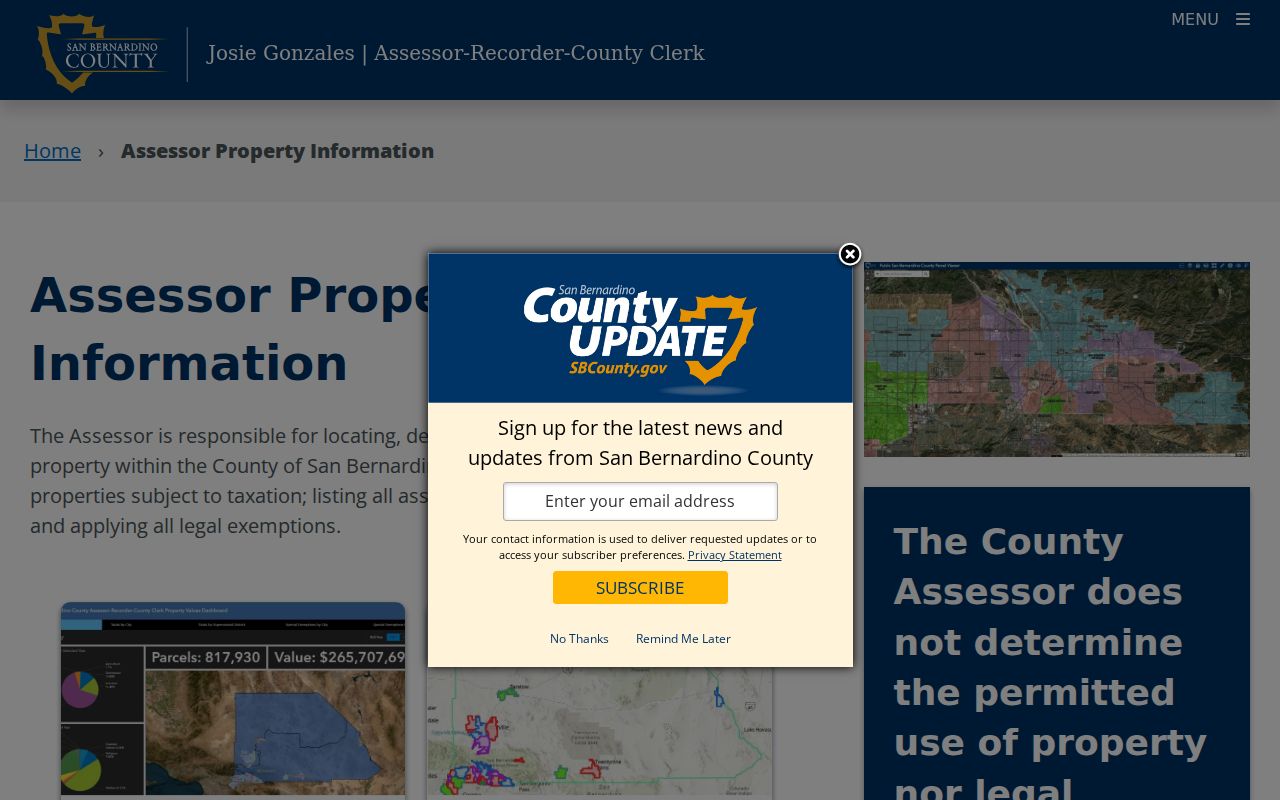
Once an APN is known, the county map and recorder search can be read together. A current owner is evidence of an assessed or recorded relationship, not automatic proof of present occupancy.
- Parcel
- A mapped tax unit identified by an assessor parcel number.
- Situs address
- The physical location assigned to the parcel, distinct from an owner’s mailing address.
- Roll
- A tax-assessment record that lists property and valuation fields for a stated period.
- Index
- A catalog of parties and document details that points to a record but may not show its full text.
The Rancho Cucamonga 1925 Recorder Cutoff
The Assessor-Recorder-County Clerk advertises a document-name index from 1925 to the present. The general official-records page describes document number, document date, document title, grantor, and grantee fields. The dedicated property-research guide adds a practical wrinkle: its online grantor-grantee chain work begins in 1958, with pre-1958 research routed to decade-arranged microfilm at the main San Bernardino office. Keep both statements in a search log rather than flattening them into one cutoff.
The internet result is a catalog. Images are viewed at the Hall of Records or High Desert Government Center, or ordered from the recorder. The official page lists first-page, subsequent-page, seal, card-surcharge, and future mail charges, so check the live fee schedule before sending payment. Mail requests generally return in one to two weeks after receipt. Appointments are strongly encouraged and map copies are handled at the San Bernardino location.
The Recorder’s Official Records page describes the index, while the Public Access System advises spelling variations. Search a party as both grantor and grantee, narrow by date or document type, and inspect the legal description before connecting a result to a parcel. The index image below belongs to that official recorder channel.
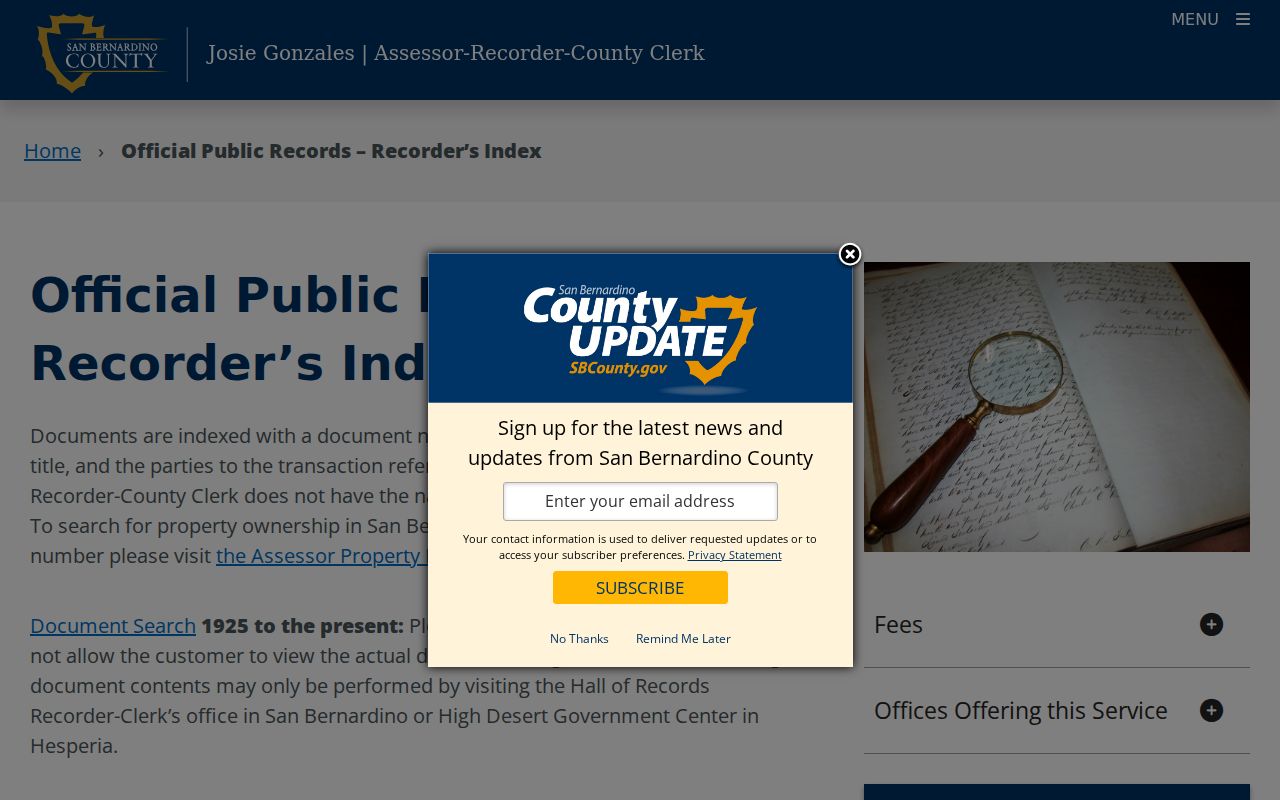
The county also offers a separate paid subscription channel for index or image delivery. It is distinct from free public index access, so a reader should not assume that an online catalog result includes a downloadable deed.
Search bridge. Use the assessor for APN and current-owner clues, then use the recorder for indexed instruments. A street address alone does not replace the legal description.
Note: A free web index can identify an instrument while the underlying image remains an office-viewing or copy-order step.
Current Rancho Cucamonga Resident Directories
“Directory” means different things across local records. The property roll is owner-centered. A court index is case-centered. A license or business filing shows an affiliation. The voter system can verify the requesting voter and supports controlled file access for approved purposes, but it is not an open name-and-address list. The table keeps those meanings separate.
| Source | What It Can Show | Keeper | Access |
|---|---|---|---|
| Assessor parcel and roll | APN, assessed owner, situs, values, mailing distinction | County ARC | Map and files are free |
| Recorder index | Parties, instrument type, date, document number | County ARC | Free index; images by office or order |
| Superior Court docket | Case party, number, filing date, type, register | San Bernardino Superior Court | Account and remote limits |
| Business or professional search | Public affiliation, license status, business address | California SOS or DCA | Free basic search |
| Library and city archive | Historical names, civic speakers, directories, newspapers | RCPL or City Clerk | Catalog, browse, or request |
Each row answers a narrower question. A person’s name in a city minute may reflect a speaker or applicant. A business address may be an office. A property owner may not be the occupant. A directory entry should therefore be paired with date, source, and role before it becomes part of a resident lookup.
Note: A record’s keeper and field label matter as much as the name returned by a search.
Rancho Cucamonga Resident Voter Check
California’s My Voter Status tool is for a voter to retrieve personal status. It commonly asks for first name, last name, date of birth, and a California identification or partial Social Security field. The result can include registration status, party preference, precinct, district, polling, and ballot information appropriate to the election. It does not reveal ballot choices, and it is not a public street directory.
Government Code §7924.000 protects street address, phone, email, precinct number, prior-registration information, identifiers, and signature except through the controlled regime of Elections Code §2194. Approved election, scholarly, journalistic, political, and governmental uses have their own application rules. Commercial use is prohibited. Safe at Home participants may register confidentially.
The identity-check screen below is linked from the California Secretary of State voter-status service. It shows why a casual third-party name match cannot stand in for an official Rancho Cucamonga residents directory result.
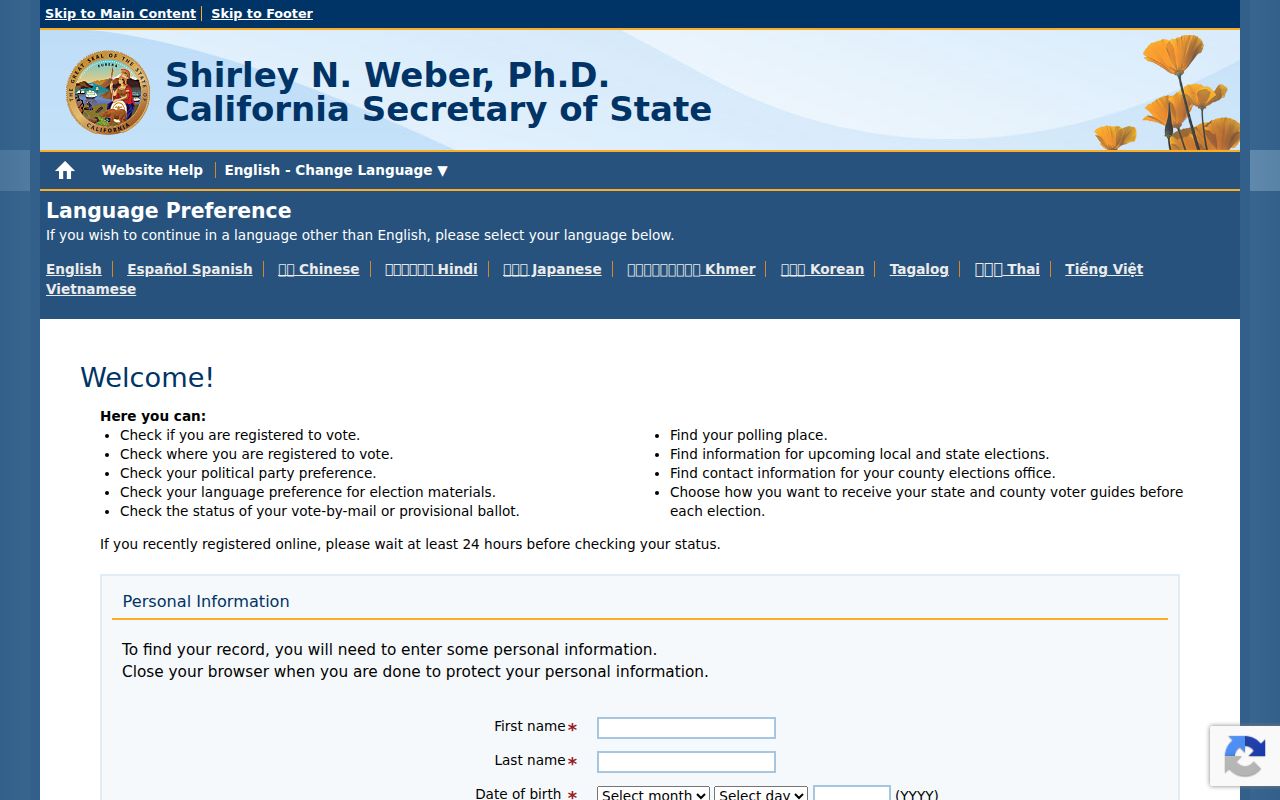
If a full voter file is legally available for an approved purpose, the Secretary of State application sets out eligibility, a statewide fee, delivery format, safeguards, and exclusions. The standard file can contain registration fields and controlled address data, while protected identifiers and confidential voters remain excluded.
Rancho Cucamonga Permit Records by Address
City permits are time-stamped address evidence. Rancho Cucamonga’s Building & Safety page routes electronic applications and plan submittals through the Online Permit Center, with kiosks near the Planning counter at City Hall. A public module may show permit number, site address, applicant, contractor, project type, or status. Account requirements and public search controls vary by module, so the live portal matters.
A permit can date an addition, reroofing, demolition, or rebuild. It can also name an owner, architect, or contractor. Those roles do not prove who slept at an address. Browse the Rancho Cucamonga Building & Safety entry page and then use the City Document Center or CPRA route for an existing file that is not posted.
The San Bernardino County ARC home connects the recorder, assessor, and clerk channels. The capture below keeps the Rancho Cucamonga residents directory workflow tied to a named public-records office rather than treating a permit as an occupant list.
For a request, name the department, address, record type, and date span. The CPRA requires an agency to respond to a described existing record; it does not require staff to create a new list of residents.
Avoid Same-Name Rancho Cucamonga Resident Merges
Rancho Cucamonga’s scale makes same-name collisions routine. Census QuickFacts reports 174,453 residents in the 2020 Census and a July 1, 2024 estimate of 176,675. A surname and city alone are weak identifiers. Use at least two independent anchors, such as a full name plus a dated address, APN, middle name, spouse, business, or known event.
Retain hyphenated and unhyphenated forms, compound surnames, initials, particles, and diacritics. Search Alta Loma, Cucamonga, North Cucamonga, and Etiwanda for records before 1977. Keep a note of the source date and party role. A court case is not a current address; a business result is not a home; an obituary is not proof that every named relative lived at the same place.
The Census QuickFacts profile adds useful scale but does not replace the custodian for a person-level record. The Superior Court case-access portal is the official source for the court channel shown below.
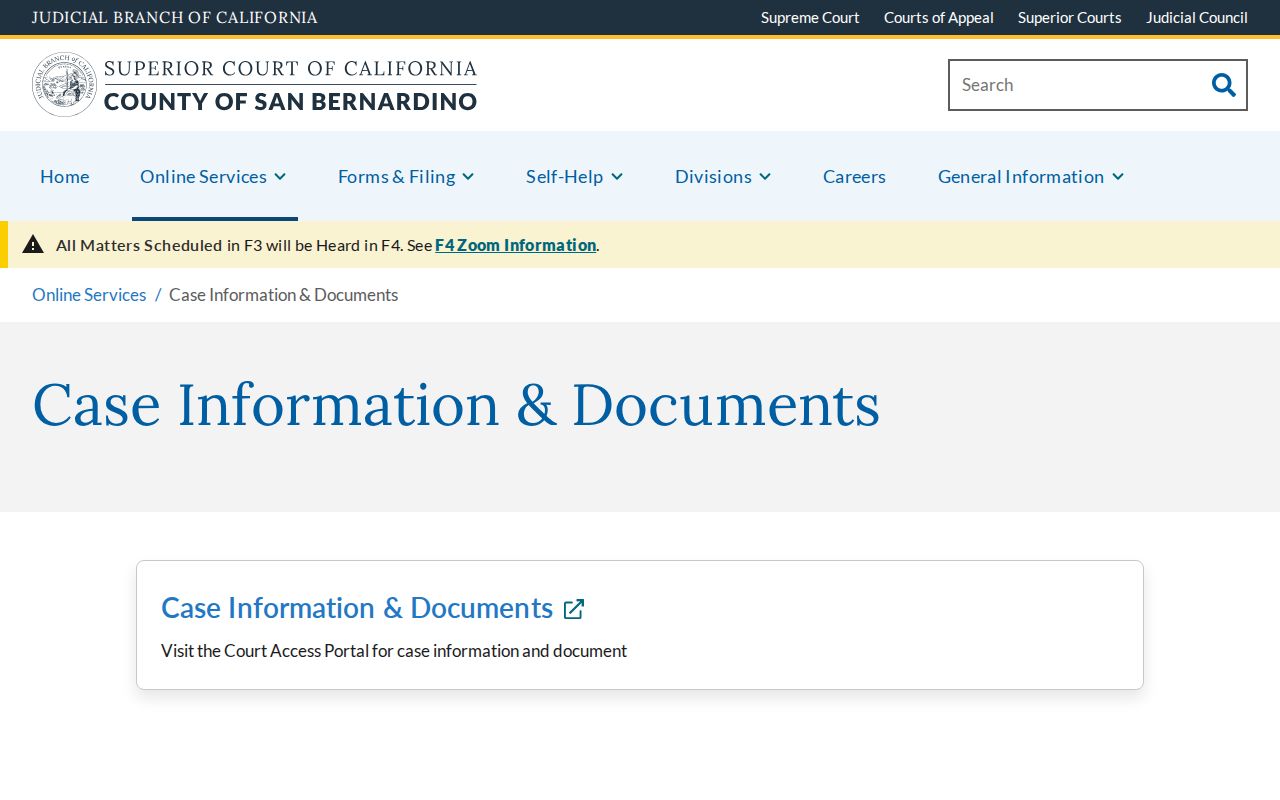
A cautious name match is slower than a one-field search, but it protects a family-history project from merging unrelated residents.
Rancho Cucamonga Vital Records Choices
California vital records use an authorized-versus-informational model, not a simple rule that every birth opens after one age and every death after another. The county or California Department of Public Health may hold the record. Authorized certified copies require an eligible requester and a sworn statement, with notarization for mailed requests. Informational copies carry a notice that they are not valid identity documents.
For a birth, CDPH state files begin in July 1905 and the 2026 state fee is $31. The county’s July 2026 mail schedule lists birth at $34, death at $26, and public or confidential marriage at $19 for events within its custody. Divorce decrees come from the Superior Court; CDPH’s separate dissolution certificate covers 1962 through June 1984 and is not the decree.
Use the California Vital Records hub to identify the right form and custodian. The screenshot below comes from the official state vital-record channel.
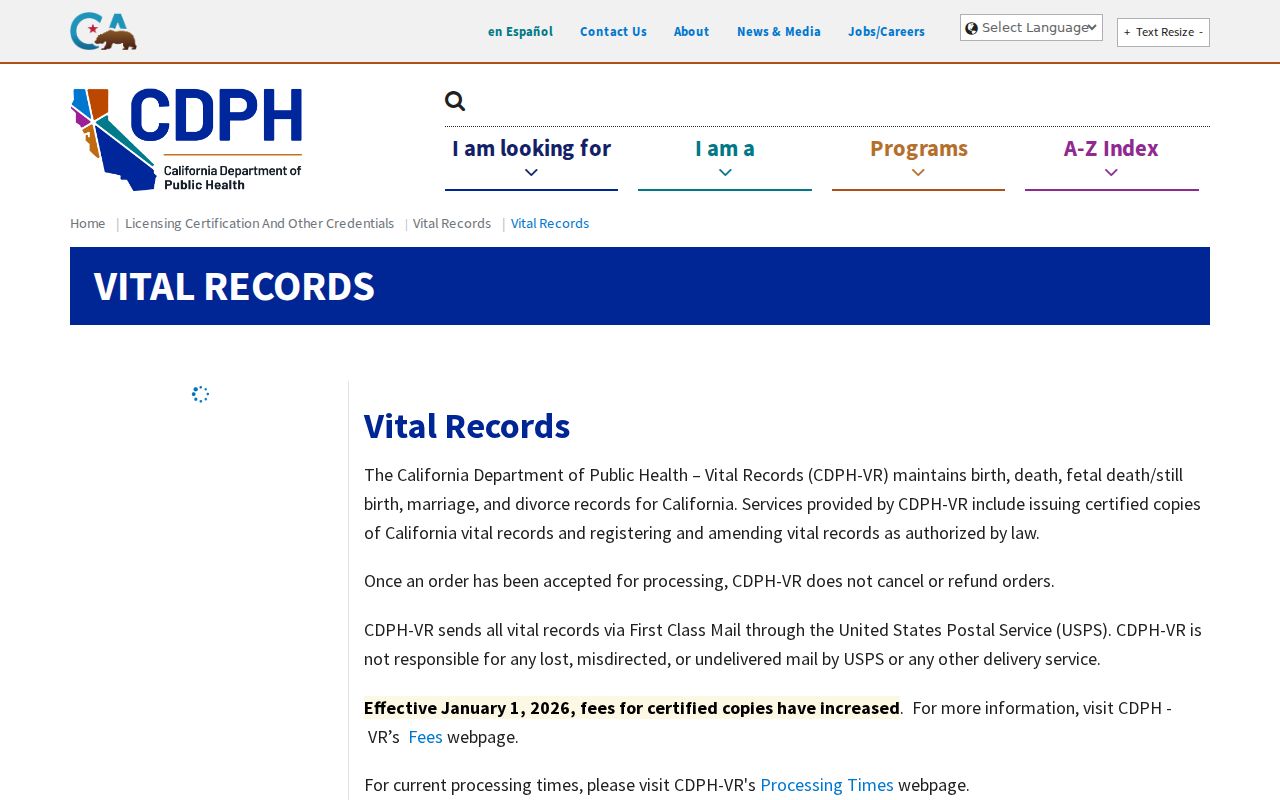
Confidential marriages, adoption files, and protected birth information have tighter rules. A search result or family story can point to a record, but only the issuing office can certify what the copy means.
Historical Rancho Cucamonga Resident Directories
Historical Rancho Cucamonga resident directories require older place names. Rancho Cucamonga incorporated in 1977 from Alta Loma, Cucamonga, and Etiwanda. Search all three, plus North Cucamonga, Ontario, Upland, and Pomona-area exchange labels. The strongest verified digitized local directory is the May 1962 Pomona-area telephone directory whose coverage page expressly names Alta Loma, Cucamonga, and Etiwanda. It is a telephone directory, not a proven criss-cross volume.
The Rancho Cucamonga city directory shelf is best confirmed with the library before travel. Paul A. Biane Library has a Local History Room and about 100,000 items, while the Research Tools page points to Portal to the Past, Calisphere, the Online Archive of California, and the California Digital Newspaper Collection. Exact Polk or Haines runs were not verified, so a search should not promise years the catalog does not confirm.
The Rancho Cucamonga Public Library and its research-tools page are practical starting points for a historical residents directory inquiry. The image below shows the local-history research channel.
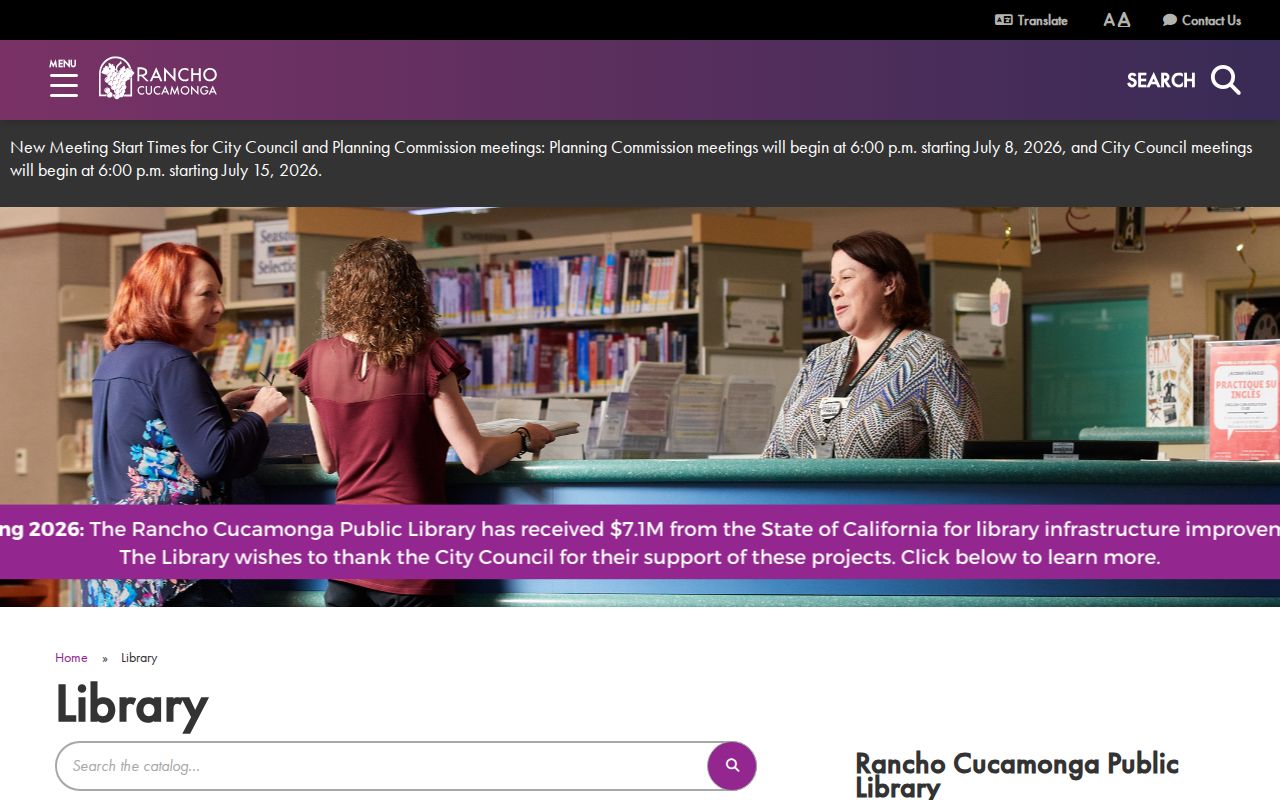
For a full treatment of year runs, entry abbreviations, reverse listings, and census pairing, use the Rancho Cucamonga city directory collections page.
Note: Pre-1977 place labels can be the difference between a complete search and a blank modern-name result.
Rancho Cucamonga's Three Directory Names
Place-name drift is part of the record trail. Rancho Cucamonga began as a 13,045-acre Mexican land grant in 1839. Cucamonga developed around vineyards, packing houses, rail, and the Santa Fe depot. Alta Loma grew along Amethyst Avenue near the Pacific Electric station. Etiwanda had its own rail-depot history and community records. A modern city keyword can hide those older headings.
PlanRC describes the three founding communities, later Red Hill, Eastside, Central North, and other planning contexts. In 2020 the city annexed about 4,085 acres in Etiwanda Heights. That changed municipal jurisdiction without erasing postal or historical labels. Record the name used by each source and do not silently modernize a citation.
The PlanRC history supplies the community-name key. Search those labels across newspapers, deeds, directories, permits, and census enumeration areas.
Rancho Cucamonga Library and Archive Records
Offline help matters when a web index stops short. Archibald Library is at 7368 Archibald Avenue. Paul A. Biane Library is at 12505 Cultural Center Drive. Published hours are Tuesday through Saturday, with Biane open later Tuesday through Thursday. General contact is (909) 477-2720 and Library.Reference@cityofrc.us. A California resident can receive a library card with photo identification and proof of address, while some remote databases require a card number and PIN.
The library can confirm catalog holdings, local newspapers, yearbooks, directory references, and obituary resources. The City Document Center can preserve names in meeting minutes, contracts, campaign disclosures, appointments, and improvement plans. The Rancho Cucamonga Document Center should be searched before a records request is filed.
These repositories are research aids, not comprehensive resident rolls. Ask with a full name, date span, old community label, school, organization, or known street so staff can test a real catalog path.
Rancho Cucamonga Business Record Affiliations
Business and license records can anchor a person to a public affiliation. California’s bizfile search can return entity name, number, status, formation, jurisdiction, agent, and filed documents. The Department of Consumer Affairs search can return board, license type, status, issue and expiration information, with fields varying by board. A county fictitious-business filing can supply a registrant and address at filing.
Those addresses may be offices, mailing locations, or agent addresses. They are useful dated clues, not proof of a household. The California license search capture below illustrates a public affiliation lookup.
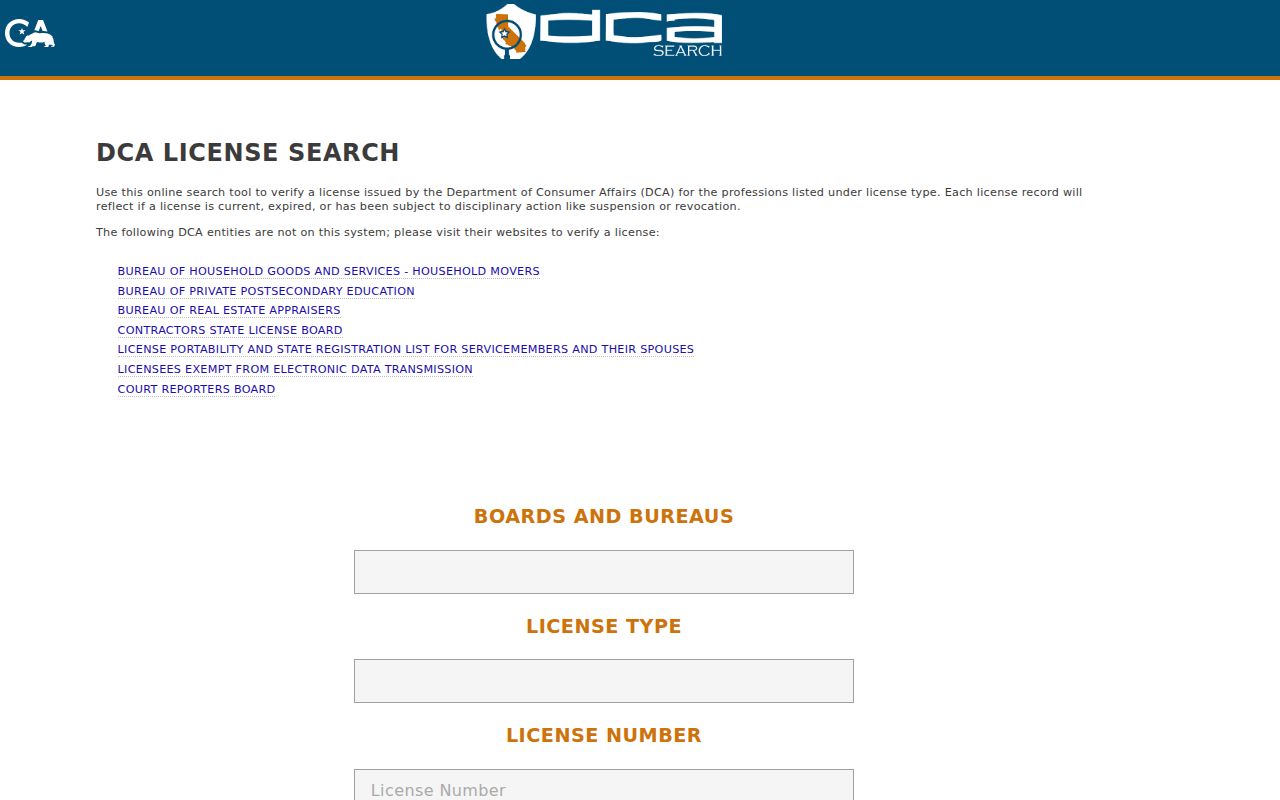
For a company, use the California Secretary of State bizfile Online search, then compare the filing date and status with city permits or the county business record. The business-search capture below illustrates a public affiliation record.
A business entity result identifies a filing relationship, not a household. Keep the role precise when entering a resident lookup.
Other official name clues include the county inmate locator, CDCR locator, Megan’s Law, and the State Controller unclaimed-property search. Each is a narrow record with its own use warning, not a substitute for a current resident directory.
Rancho Cucamonga Resident Privacy Limits
Some people are absent from public-facing results by design. Safe at Home gives qualifying survivors and other protected categories a substitute mailing address and confidential voter registration under Government Code §§6205–6216. Elections data, DMV information, utility accounts, private association rosters, and household-member details do not form an open public directory. A missing result is not proof that a person is absent from the city.
California’s privacy and deletion systems can address copies held by data brokers, but removing a broker copy does not erase a deed, court record, or other government record lawfully held by its custodian. Use the source office for corrections, and use personal, lawful research for family history, civic records, reconnection, or property curiosity.
Respect the boundary. Rancho Cucamonga records may support lawful personal research. Do not use a lookup to stalk, harass, intimidate, or harm anyone, and verify important facts with the custodian.
The Safe at Home program explains why some address records are intentionally shielded. The right result may be a protected non-result.
Note: A protected non-result is a privacy outcome, not evidence that the person is absent from Rancho Cucamonga.