
Rancho Cucamonga Directory Collections
The city directory story begins with a jurisdiction change. Rancho Cucamonga incorporated in 1977 by combining Alta Loma, Cucamonga, and Etiwanda. A modern title search alone can miss earlier residents. The coverage table separates verified sources from collections that require a catalog or reference-desk check.
| Collection or source | Years | Where held | What it adds |
|---|---|---|---|
| Pomona-area telephone directory | May 1962 | Library of Congress digital volume | Telephone entries and coverage for Alta Loma, Cucamonga, and Etiwanda |
| Federal population census | 1850–1950 public | NARA, FamilySearch, library databases | Household members, age, birthplace, occupation, and later address clues |
| Local newspapers and directories | Exact runs not published online | Rancho Cucamonga Library and regional libraries | Obituaries, notices, advertisements, and addresses |
| Recorder index | 1925–present advertised | County ARC web and office | Owners and transfers that anchor a directory find |
| PlanRC Portal to the Past | Community history through present | City planning history and library research tools | Names, place labels, development eras, and historic resources |
The exact Polk or Haines run for Rancho Cucamonga was not verified in an official online shelf list. That gap matters. A careful city directory search asks the library to confirm publisher, year, community coverage, and abbreviation pages before promising a result.
Note: An unverified publisher or year should be treated as a catalog question, not a fact about local directory coverage.
Rancho Cucamonga's Four Directory Names
A Rancho Cucamonga city directory query should rotate through the three founding communities and North Cucamonga. Cucamonga grew around vineyards, wineries, packing houses, and the Santa Fe depot. Alta Loma followed a more semi-rural foothill pattern around Amethyst Avenue and the Pacific Electric station. Etiwanda had its own rail-depot and citrus-colony history. The catalog may file a volume under a regional exchange rather than the modern city.
The city’s official PlanRC history describes a 13,045-acre Mexican land grant made to Tiburcio Tapia in 1839, later community development, rail connections, and postwar tracts. Search Ontario, Upland, Pomona, and “North Cucamonga” when a surname does not appear under Rancho Cucamonga. Do not erase the source’s original label in a family-history note.
The PlanRC community history supplies the name key for older city directory searches.
The local-history image below shows the official library research-tools route rather than a generic directory advertisement.
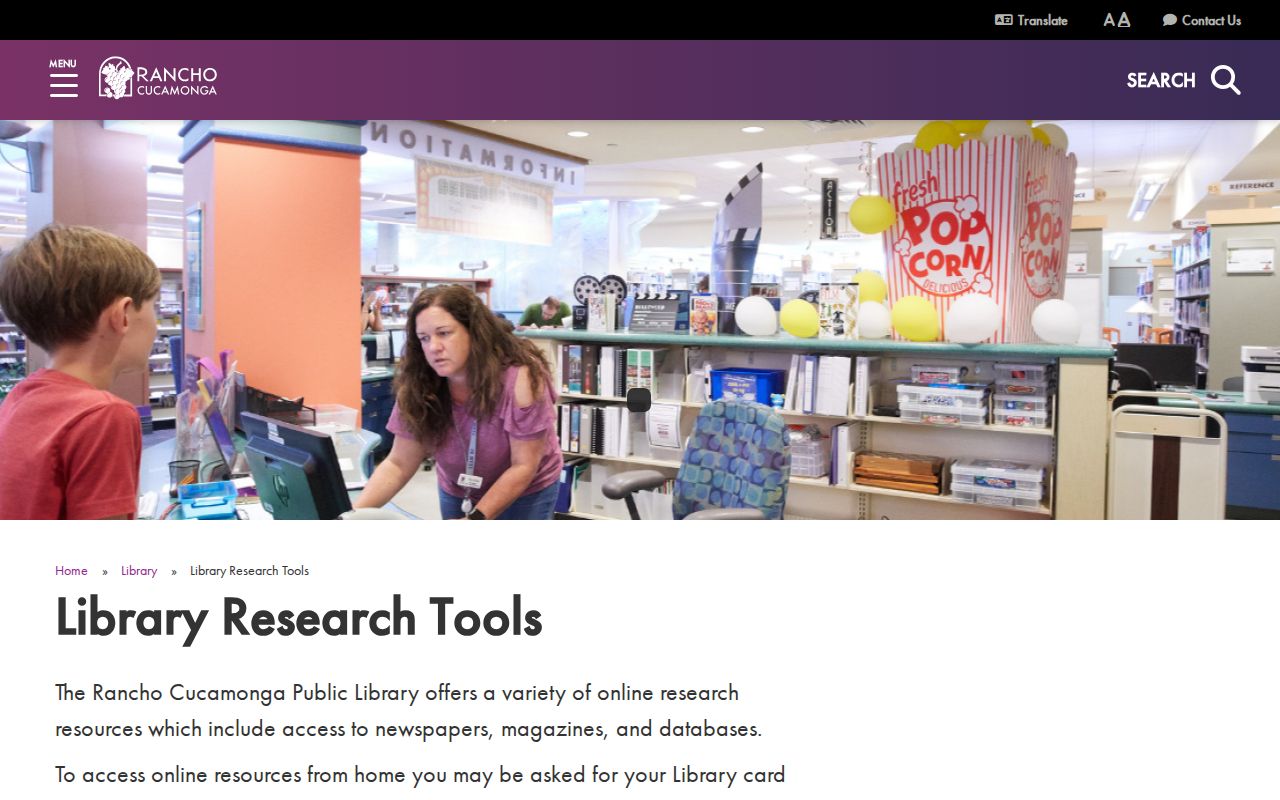
Use each place label as a search pivot, then record whether a hit is a resident, a business, a newspaper mention, or a property reference.
Reading a Rancho Cucamonga Directory Entry
A twentieth-century city directory entry often starts with a surname and given name or initials. It may add a spouse in parentheses, occupation, employer, residence address, business address, widow notation, or a brief abbreviation. The exact key belongs to the volume. Do not expand an abbreviation from memory when the volume’s own explanation is available.
Read the entry as a dated snapshot. An address can connect a person to a parcel or neighborhood. An occupation can distinguish two people with the same name. A spouse or householder mark can suggest a household structure. None of those fields proves that every person in a home appears in the listing.
- Householder index
- A name-oriented finding aid for a principal household entry, when a volume provides one.
- Criss-cross directory
- A reverse listing arranged by street, number, or telephone so an address can lead to a name.
- Abbreviation key
- The volume’s own explanation for marks such as householder, resides, rooms, employed, or widow.
- Index versus image
- An index points to an entry; the page image supplies the wording and context.
Copy the entry exactly, including punctuation and address format. Note the volume, page, community label, and date before comparing it with a deed or census result.
Note: The exact volume’s abbreviation key controls the meaning of every mark in a city directory entry.
Reverse Directory Listings in Rancho Cucamonga
Reverse listings start with a street or telephone. They are valuable when a known address comes before a name, especially between census schedules. The verified May 1962 Pomona-area telephone directory includes Alta Loma, Cucamonga, and Etiwanda on its coverage page. It is direct local telephone evidence before incorporation, but it is not proof of a complete criss-cross collection.
The Library of Congress explains that pre-1976 California telephone directories were microfilmed or digitized and recommends its directory card catalog when a community is missing from a cross-reference. Search the Pomona and Ontario exchange years, then check the regional library catalog for print or microfilm. A missing title should lead to a reference question, not an invented year run.
Use a reverse listing to form a hypothesis. Test it with a county parcel, a recorded instrument, a newspaper notice, a census household, or a probate record. The Library of Congress 1962 directory record is the verified local example.
Rancho Cucamonga Directories with Census Years
Pairing a city directory with the federal census is one of the strongest ways to test a historical household. NARA identifies 1850 through 1950 population schedules as public under the 72-year rule. They can name household members and show age, birthplace, occupation, immigration, marital details, and address information in later schedules. Most 1890 schedules were destroyed in a 1921 fire, a national gap rather than a local San Bernardino courthouse loss.
Begin with the directory name and address. Search the same person in the nearest census year, then search the predecessor community and likely enumeration district. Compare ages, occupations, household members, and street clues. If the directory shows a move, use the next volume and a deed or obituary to decide whether the household changed address, surname, or status.
The National Archives census guide explains the public schedule boundary. The image below represents the census research channel that complements a Rancho Cucamonga city directory.
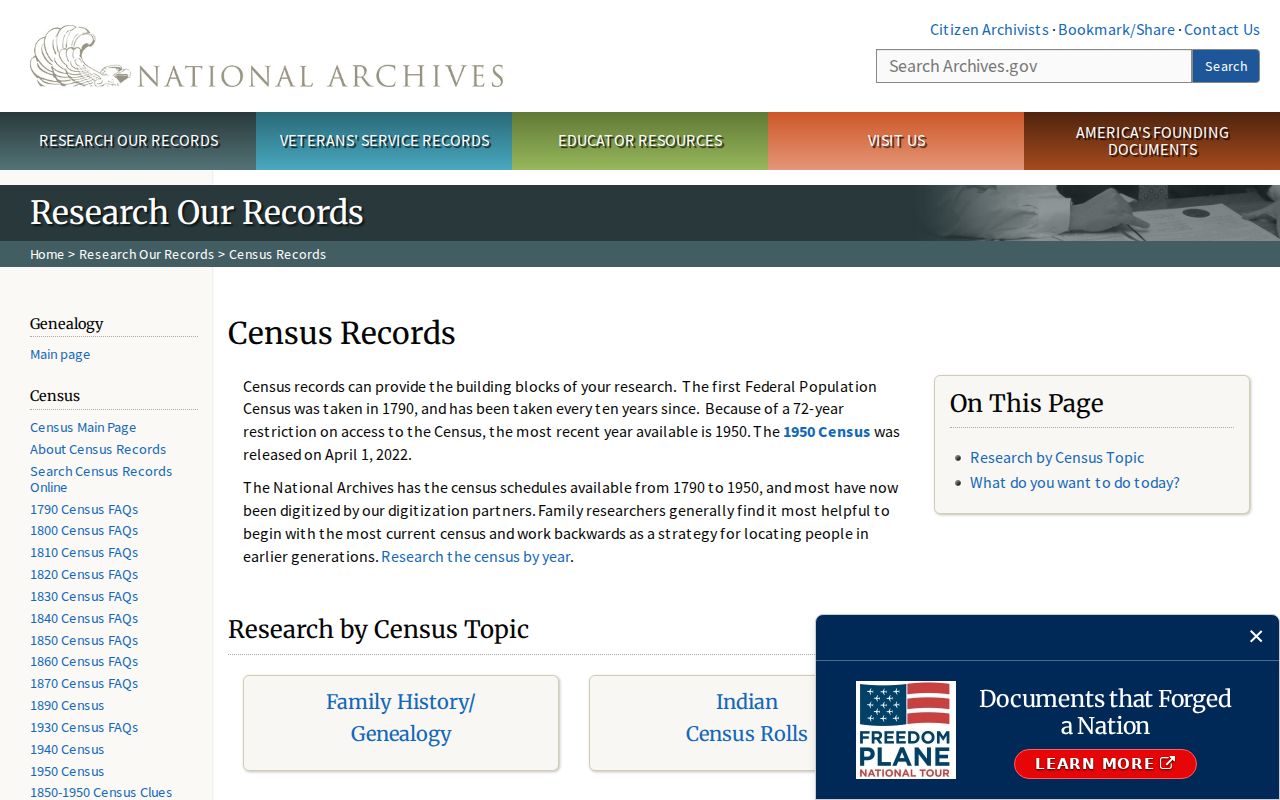
Use the census for household composition and the city directory for between-census address and occupation clues. Keep the two citations separate.
Note: Census pairing is strongest when address, age, occupation, and household members agree across the two sources.
Rancho Cucamonga Railheads in City Directory Search
Local geography explains why a name can surface in one directory and vanish from another. Cucamonga’s rail and packing-house economy, Alta Loma’s foothill lots, and Etiwanda’s colony and rail identity produced different social and business references. Pacific Electric service reached Etiwanda in 1914, while the Santa Fe Cucamonga depot dates to the older transport story.
Search Route 66 and Foothill Boulevard in newspapers and permits. Try railroad stations, packing houses, wineries, citrus associations, and community names as context terms. These are not resident rosters, but they can place a household or business in the right year and neighborhood.
The research image below comes from the San Bernardino County Museum’s Rains House history, a named property record showing how an address can carry residents, owners, and preservation context across decades.
The Rains House trail crosses a Mexican-land-grant family, a sheriff’s sale, later private ownership, restoration, and county preservation. The Library of Congress HABS record offers a second address-level example at 5490 Etiwanda Avenue, with photographs and data pages for the Chaffey-Isle/McGuire House. Together they model how a city directory can be combined with deeds and local history.
Rancho Cucamonga Directory Reference Desk
Rancho Cucamonga Public Library is the best local check for a directory collection whose exact years are not posted online. Archibald Library is at 7368 Archibald Avenue. Paul A. Biane Library is at 12505 Cultural Center Drive and has the Local History Room. General contact is (909) 477-2720 and Library.Reference@cityofrc.us. Published hours vary by branch, with Tuesday through Saturday service and later evening hours at Biane on some weekdays.
The library’s Research Tools page links Portal to the Past, Calisphere, the Online Archive of California, and the California Digital Newspaper Collection. Remote databases may need a library card number and PIN. Staff can test the catalog for local newspapers, yearbooks, directory references, and obituary sources. Ask for the publisher, year, place label, and whether the item is print, microfilm, or digital.
A catalog confirmation is more useful than a broad promise. Record the call or visit date and the exact collection note, then build the city directory search around what is actually held.
Note: Library staff can confirm holdings, but a reference lead still needs a citation to the volume or page inspected.
City Minutes as Rancho Cucamonga Records
After incorporation, the city’s Laserfiche Document Center becomes an unexpected people index. Minutes, agendas, contracts, campaign disclosures, appointments, improvement plans, and applications can preserve names, addresses, speakers, applicants, and officials as submitted at the time. They are civic records, not a general resident directory, so context and date must stay attached.
Search the Rancho Cucamonga Document Center for exact phrases and surname variants. If a record is not posted, the City Clerk’s CPRA route can request an existing file by department, record type, address or date span. The city does not have to create a new person list or answer open-ended research questions.
City minutes can bridge a directory gap when a person spoke at a public meeting or applied for a project. They cannot confirm that the person remained at the listed address.
Rancho Cucamonga Directories for Family History
Begin with one known entry and make a dated trail. Search the modern city name plus Alta Loma, Cucamonga, North Cucamonga, and Etiwanda. Capture the page, address, occupation, spouse notation, and abbreviation key. Then step backward one volume at a time, looking for the same address, a spouse’s name, or a nearby business. When a surname changes, use reverse listings and the parcel record to avoid losing the household.
- Choose a known name, address, or year and write down the exact source label.
- Read the directory entry in full, including occupation, spouse, address, and abbreviations.
- Move backward to the prior verified volume and search both surname and address.
- Pair the result with the nearest census schedule and note household members and ages.
- Use deeds, probate, obituaries, permits, and newspapers to test a move, death, inheritance, or rebuild.
Probate can identify heirs after an owner dies, while a deed can identify a transfer without proving residence. The Rains House provenance demonstrates why these sources need to be read as one dated story.
When a directory find needs a current identity check, use the Rancho Cucamonga resident lookup workflow. When it needs a parcel chain, use the street directory’s address method. The city directory remains the historical collection and household bridge.