
Search the Rancho Cucamonga Residents Directory
A good Rancho Cucamonga residents directory search starts with a fact you can test. An address can lead to a parcel. It can also lead to an APN, an assessed owner, and finally a recorded instrument. A name can lead to a court party record. It can also surface a professional license, a business filing, or an obituary clue. No single result proves who lives at a home. The assessor describes property, the recorder indexes parties to documents, the courts describe cases, and California election tools shield voter data from casual browsing.
For a current address question, open with the San Bernardino County Assessor property-information portal. For a deed trail, move from the APN or assessed owner into the recorder's grantor-grantee index. For a person, match independent dates and identifiers. Only then treat two records as the same individual. Older households may hide under different labels. Alta Loma, Cucamonga, North Cucamonga, and Etiwanda all existed separately until the communities joined together in 1977, so those names still matter as search terms in the directory.
- Write down the exact clue: name, address, approximate year, community label, or event.
- Use Parcel Access or the assessor roll to identify a parcel, owner name, or situs address.
- Search the recorder by party, document type, date, and both grantor and grantee roles.
- Use the court, vital, license, business, or library source that matches the question.
- Save the source date and verify the result with the agency that holds the record.
That sequence keeps the Rancho Cucamonga residents directory tied to records that answer a defined question rather than a loose name match.
Note: The assessor's assessed-owner field is a parcel clue, not proof that everyone at the situs address lives there.
Rancho Cucamonga Resident Records Offices
Rancho Cucamonga sits inside San Bernardino County and keeps no county-records machinery of its own. The city clerk holds municipal legislative and administrative material. The county Assessor-Recorder-County Clerk handles parcels, recorded instruments, marriages, and other clerk records. The Superior Court handles cases. Statewide vital, voter, license, and business systems belong to California agencies in Sacramento. Knowing that division saves a directory search from landing at the wrong counter.
San Bernardino County ARC
Hall of Records
222 W. Hospitality Lane
San Bernardino, CA 92415-0022
(909) 387-8306
San Bernardino County Assessor
Parcel Access, maps, roll downloads, and historical valuations
California Secretary of State
Personal voter-status verification and controlled voter-file requests
The city's City Clerk Services and document portal covers minutes, contracts, and campaign disclosures. Appointments and existing municipal records are there too. A California Public Records Act request has one requirement that trips people up. It must describe an existing record. The act never forces a city to build a new residents directory. Nor does it require an answer to an open-ended question about a person.
Note: County and state custodians hold most person-indexed records because Rancho Cucamonga is not an independent county jurisdiction.
Rancho Cucamonga Parcel-First Search
Here is the quirk that shapes everything: the recorder cannot find ownership by street address. The assessor is the bridge. Search an address or click the parcel map. Jot down the APN and current assessed owner. Then carry that name into the recorder's index. Keep both the mailing address and the situs address, since they often differ. Remember that an APN is a tax and map key. It is never a list of everyone inside the parcel.
The assessor's govPIMS search offers Address, APN, map click, Name Search, Situs Search, Property ID, and parcel or tract map modes. Results group into parcel information, ownership, parcel history, roll-value history, characteristics, and reports. Published annual secured rolls, current-owner files, all-owner files, property characteristics, and transfer data can widen a project past one lot. They remain assessment snapshots, though, not title opinions or household rolls.
The Assessor Property Information page is where Parcel Access and the downloadable roll material begin. That official page displays the public starting point for any Rancho Cucamonga residents directory search. Build it on a property clue from there.
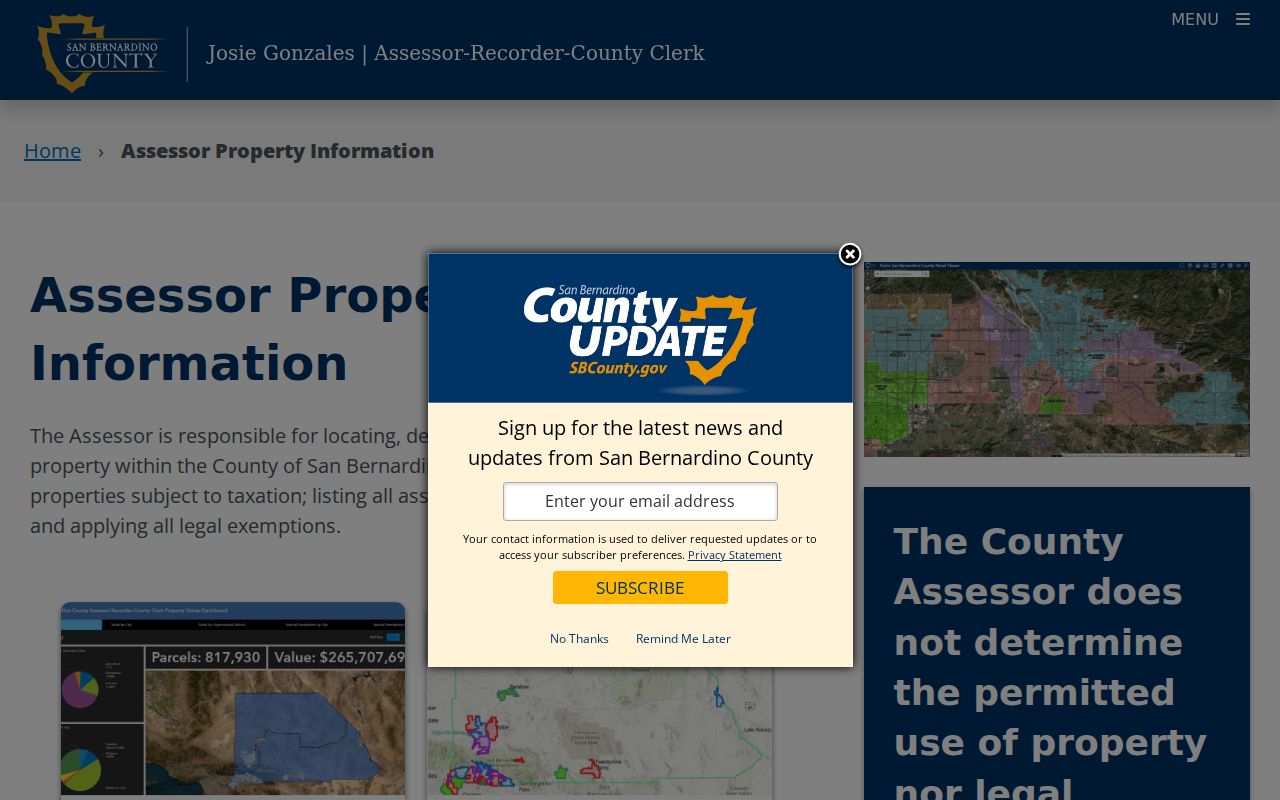
With an APN in hand, the county map and the recorder search can be read side by side. A current owner is evidence of an assessed or recorded relationship, nothing more. It is not automatic proof of who occupies the home today.
- Parcel
- A mapped tax unit identified by an assessor parcel number.
- Situs address
- The physical location assigned to the parcel, distinct from an owner’s mailing address.
- Roll
- A tax-assessment record that lists property and valuation fields for a stated period.
- Index
- A catalog of parties and document details that points to a record but may not show its full text.
The Rancho Cucamonga 1925 Recorder Cutoff
The Assessor-Recorder-County Clerk advertises a document-name index running from 1925 to the present. The general official-records page describes its fields. It covers document number, document date, document title, grantor, and grantee. The dedicated property-research guide adds a wrinkle. Its online grantor-grantee chain work starts in 1958. Anything earlier is routed to decade-arranged microfilm at the main San Bernardino office. Log both statements separately rather than flattening them into a single cutoff.
The internet result is only a catalog. Images are viewed at the Hall of Records or the High Desert Government Center. They can also be ordered from the recorder. The official page lists first-page, subsequent-page, seal, card-surcharge, and future mail charges. So confirm the live fee schedule before sending payment. Mail requests generally return in one to two weeks after receipt. Appointments are strongly encouraged, and map copies are handled only at the San Bernardino location.
The Recorder's Official Records page describes the index. Meanwhile, the Public Access System warns about spelling variations. Search each party as both grantor and grantee. Narrow by date or document type, and inspect the legal description before tying a result to a parcel. The index image displayed on that page belongs to the official recorder channel.
The county also sells a separate subscription channel for index or image delivery. That paid service is not the same as the free public index. An online catalog hit, in other words, may still leave the deed itself behind a copy order or an office visit.
Search bridge. Use the assessor for APN and current-owner clues, then use the recorder for indexed instruments. A street address alone does not replace the legal description.
Note: A free web index can name the instrument, yet the image itself stays an office-viewing or copy-order step.
Current Rancho Cucamonga Resident Directories
In local records, the word "directory" carries several distinct meanings. A property roll centers on owners. Court indexes center on cases, and license or business filings show affiliations. The voter system verifies the voter who asks. It allows controlled file access for approved purposes, but it is not an open name-and-address list. Rancho Cucamonga residents should read each record type on its own terms. The table keeps those meanings apart.
| Source | What It Can Show | Keeper | Access |
|---|---|---|---|
| Assessor parcel and roll | APN, assessed owner, situs, values, mailing distinction | County ARC | Map and files are free |
| Recorder index | Parties, instrument type, date, document number | County ARC | Free index; images by office or order |
| Superior Court docket | Case party, number, filing date, type, register | San Bernardino Superior Court | Account and remote limits |
| Business or professional search | Public affiliation, license status, business address | California SOS or DCA | Free basic search |
| Library and city archive | Historical names, civic speakers, directories, newspapers | RCPL or City Clerk | Catalog, browse, or request |
Each row answers a narrower question. A name in city minutes may belong to a speaker or applicant. A business address may just be an office. The owner on a parcel may not be the occupant at all. Before any entry feeds a resident lookup, pair it with a date, a source, and the person's role in the record. The date and the source anchor it. The role tells you what the name actually means.
Note: A record's keeper matters. Note: Its field label matters just as much as the name a search returns.
Rancho Cucamonga Resident Voter Check
California's My Voter Status tool exists for voters to retrieve their own status. It typically asks for a first name, last name, date of birth, and a California identification number or partial Social Security field. The response can include registration status, party preference, precinct, district, polling place, and ballot details fitting the election. It never shows ballot choices. And it is not a public street directory.
Government Code §7924.000 shields street address, phone, email, precinct number, prior-registration data, identifiers, and signatures, except under the controlled regime of Elections Code §2194. Election, scholarly, journalistic, political, and governmental uses each follow their own application rules. Commercial use is barred outright. Safe at Home participants may register confidentially.
The identity-check screen below links from the California Secretary of State voter-status service. It demonstrates why a casual third-party name match cannot stand in for an official Rancho Cucamonga residents directory result.
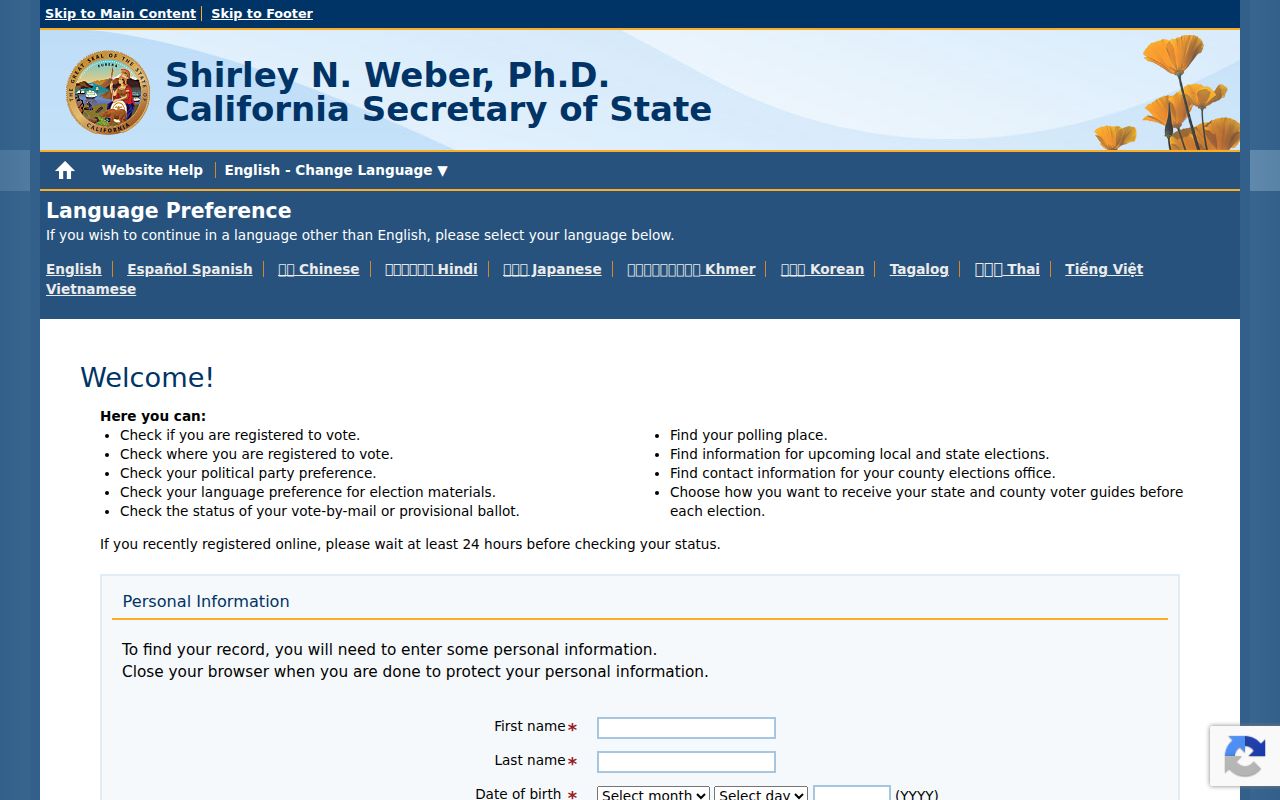
When an approved purpose legally unlocks the full voter file, the Secretary of State application governs eligibility, a statewide fee, delivery format, safeguards, and exclusions. The standard file carries registration fields and controlled address data. Protected identifiers stay out. Confidential voters remain excluded as well.
Rancho Cucamonga Permit Records by Address
City permits are time-stamped evidence tied to an address. Rancho Cucamonga's Building & Safety page routes electronic applications and plan submittals through the Online Permit Center. Kiosks sit near the Planning counter at City Hall. A public module may display permit number, site address, applicant, contractor, project type, or status. Account requirements and public search controls differ by module. The live portal is what matters.
A permit can date an addition, reroofing, demolition, or rebuild. It can also name an owner, architect, or contractor. None of those roles prove who actually slept there. Browse the Rancho Cucamonga Building & Safety entry page. Then use the City Document Center or the CPRA route for an existing file that is not posted.
The San Bernardino County ARC home ties the recorder, assessor, and clerk channels together. The image below anchors the Rancho Cucamonga residents directory workflow to a named public-records office. It does not treat a permit as an occupant list.
For a request, name the department, the address, the record type, and the date span. The CPRA obliges an agency to respond about a described existing record. It never forces staff to build a fresh list of residents.
Avoid Same-Name Rancho Cucamonga Resident Merges
Rancho Cucamonga is big enough that two residents often share a name. The 2020 Census counted 174,453 people. QuickFacts puts a July 1, 2024 estimate at 176,675. With that many neighbors, a surname plus the city tells you almost nothing. Anchor any resident lookup to at least two independent details. Use a full name with a dated address, an APN, a middle name, a spouse, a business, or a known event.
Spelling matters in the Rancho Cucamonga residents directory. Keep hyphenated and unhyphenated forms, compound surnames, initials, particles, and diacritics. For records before 1977, search Alta Loma, Cucamonga, North Cucamonga, and Etiwanda too. Note the source date and each party's role as you go. A court case is not a current address. A business result is not a home. An obituary never proves that every named relative lived at one place.
The Census QuickFacts profile shows the scale. It cannot replace the custodian of a person-level record. For the court channel, the Superior Court case-access portal is the official source.
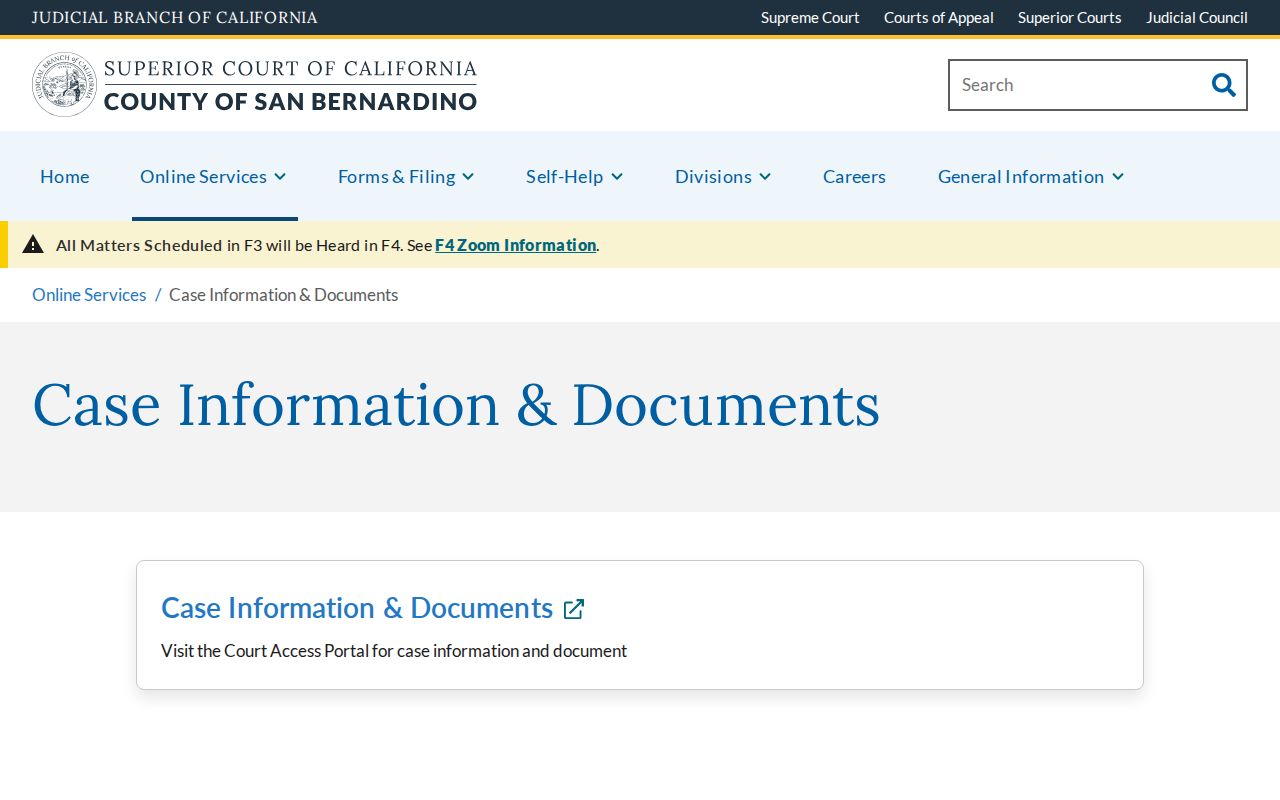
A cautious name match is slower than a one-field search. It spares a family-history project from merging unrelated residents, though.
Rancho Cucamonga Vital Records Choices
California splits vital records into authorized and informational copies rather than a simple age rule. A birth or death record may sit with the county. It may also sit with the California Department of Public Health. Authorized certified copies go only to eligible requesters who sign a sworn statement. Mailed orders need notarization. Informational copies are different. They carry a notice stating they are not valid identity documents.
State birth files at CDPH begin in July 1905. The 2026 state fee is $31. The county's July 2026 mail schedule prices a birth at $34. A death runs $26. A public or confidential marriage runs $19 for events the county holds. Divorce decrees stay with the Superior Court. CDPH offers a separate dissolution certificate covering 1962 through June 1984. That certificate is not the decree itself.
The California Vital Records hub shows the right form and the right custodian. The screenshot comes from the official state vital-record channel.
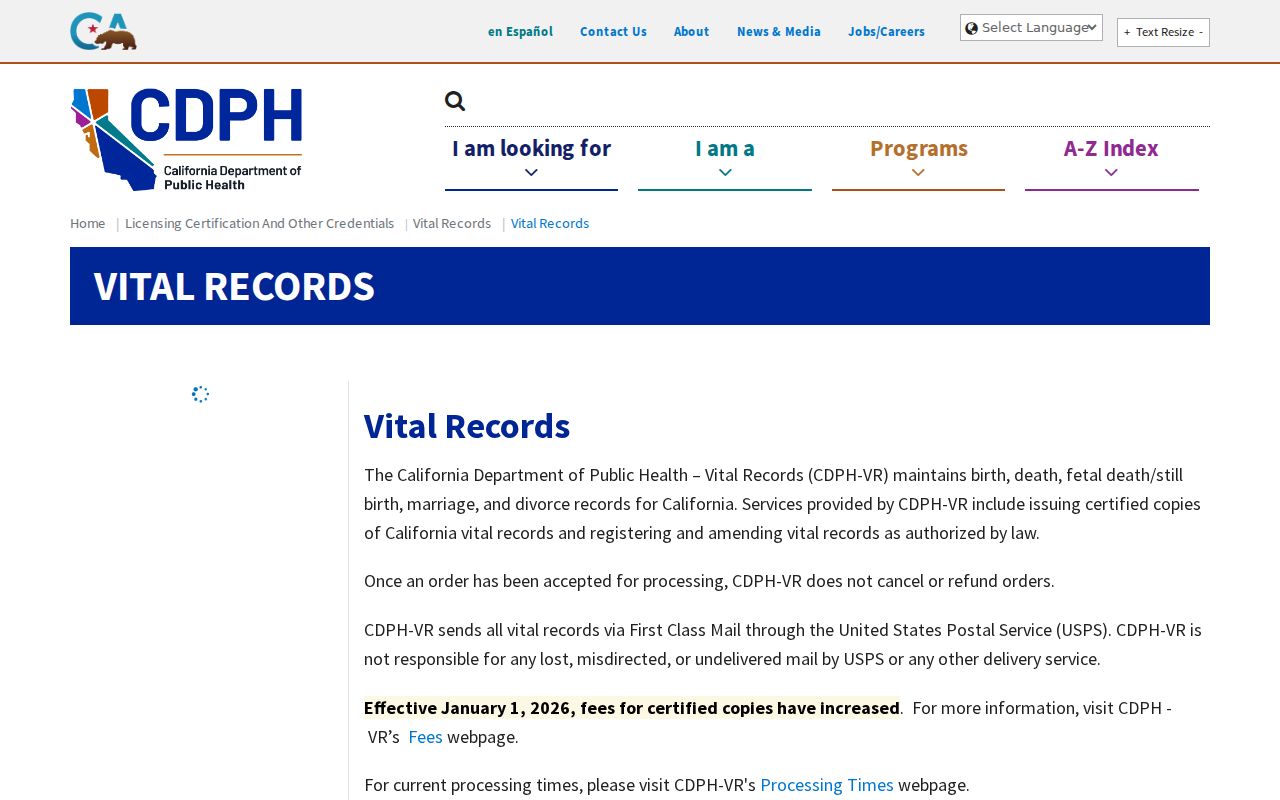
Confidential marriages, adoption files, and protected birth details all sit behind tighter rules. A search result or a family story can point toward a record, but only the issuing office can say what a certified copy actually means.
Historical Rancho Cucamonga Resident Directories
Historical Rancho Cucamonga resident directories demand older place names. The city incorporated in 1977 from Alta Loma, Cucamonga, and Etiwanda. Search all three, plus North Cucamonga, Ontario, Upland, and Pomona-area exchange labels. The strongest digitized local directory is the May 1962 Pomona-area telephone directory. Its coverage page expressly names Alta Loma, Cucamonga, and Etiwanda. It is a telephone directory, though, not a proven criss-cross volume.
Call the library before traveling to confirm the city directory shelf. Paul A. Biane Library holds a Local History Room with about 100,000 items. Its Research Tools page points to Portal to the Past and Calisphere. It also lists the Online Archive of California and the California Digital Newspaper Collection. Exact Polk or Haines runs could not be confirmed. So do not promise years the catalog does not list. The Rancho Cucamonga Public Library and its research-tools page are the practical starting points. They anchor any historical residents directory inquiry. The image below shows the local-history research channel.
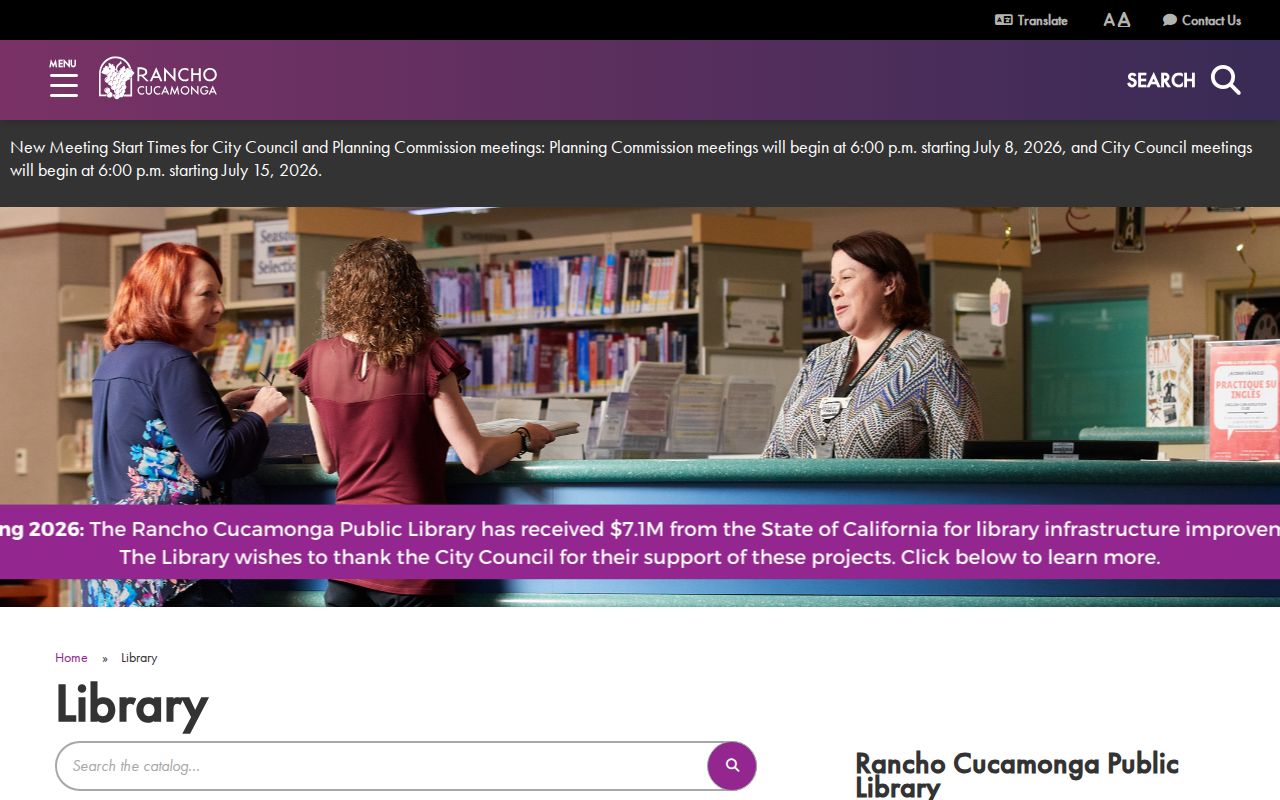
For a deeper treatment of year runs, entry abbreviations, reverse listings, and census pairing, use the Rancho Cucamonga city directory collections page.
Note: Pre-1977 place labels can decide whether a search returns results or a blank modern-name miss.
Rancho Cucamonga's Three Directory Names
Place-name drift is part of the record trail here. Rancho Cucamonga began as a 13,045-acre Mexican land grant in 1839. Cucamonga grew around vineyards, packing houses, rail, and the Santa Fe depot. Alta Loma developed along Amethyst Avenue near the Pacific Electric station. Etiwanda carried its own rail-depot history and community records. A modern city keyword can hide all of those older headings.
PlanRC describes the three founding communities. It also covers later Red Hill, Eastside, Central North, and other planning contexts. In 2020 the city annexed about 4,085 acres in Etiwanda Heights. That shifted municipal jurisdiction without erasing postal or historical labels. Record the name each source used, and never silently modernize a citation. The PlanRC history supplies the community-name key. Search those labels across newspapers, deeds, directories, permits, and census enumeration areas.
Rancho Cucamonga Library and Archive Records
Sometimes a web index stops short and offline help carries the search. Archibald Library sits at 7368 Archibald Avenue, and Paul A. Biane Library at 12505 Cultural Center Drive. Published hours run Tuesday through Saturday, with Biane open later Tuesday through Thursday. General contact is (909) 477-2720 and Library.Reference@cityofrc.us. A California resident can get a library card with photo identification and proof of address. Some remote databases need a card number and PIN.
Staff can confirm catalog holdings, local newspapers, yearbooks, directory references, and obituary resources. The City Document Center preserves names in meeting minutes and contracts. Campaign disclosures, appointments, and improvement plans appear there too. Search the Rancho Cucamonga Document Center before filing any records request.
These repositories are research aids, not comprehensive resident rolls. Bring a full name, a date span, an old community label, a school, an organization, or a known street. Staff can then test a real catalog path.
Rancho Cucamonga Business Record Affiliations
Business and license records can anchor a person to a public affiliation. California's bizfile search may return entity name, number, status, formation, jurisdiction, agent, and filed documents. The Department of Consumer Affairs search returns board, license type, and status. It also shows issue and expiration information. Fields vary by board. A county fictitious-business filing can supply a registrant and the address given at filing.
Those addresses may be offices, mailing locations, or agent addresses. Treat them as dated clues rather than proof of a household. The California license search capture below illustrates a public affiliation lookup.
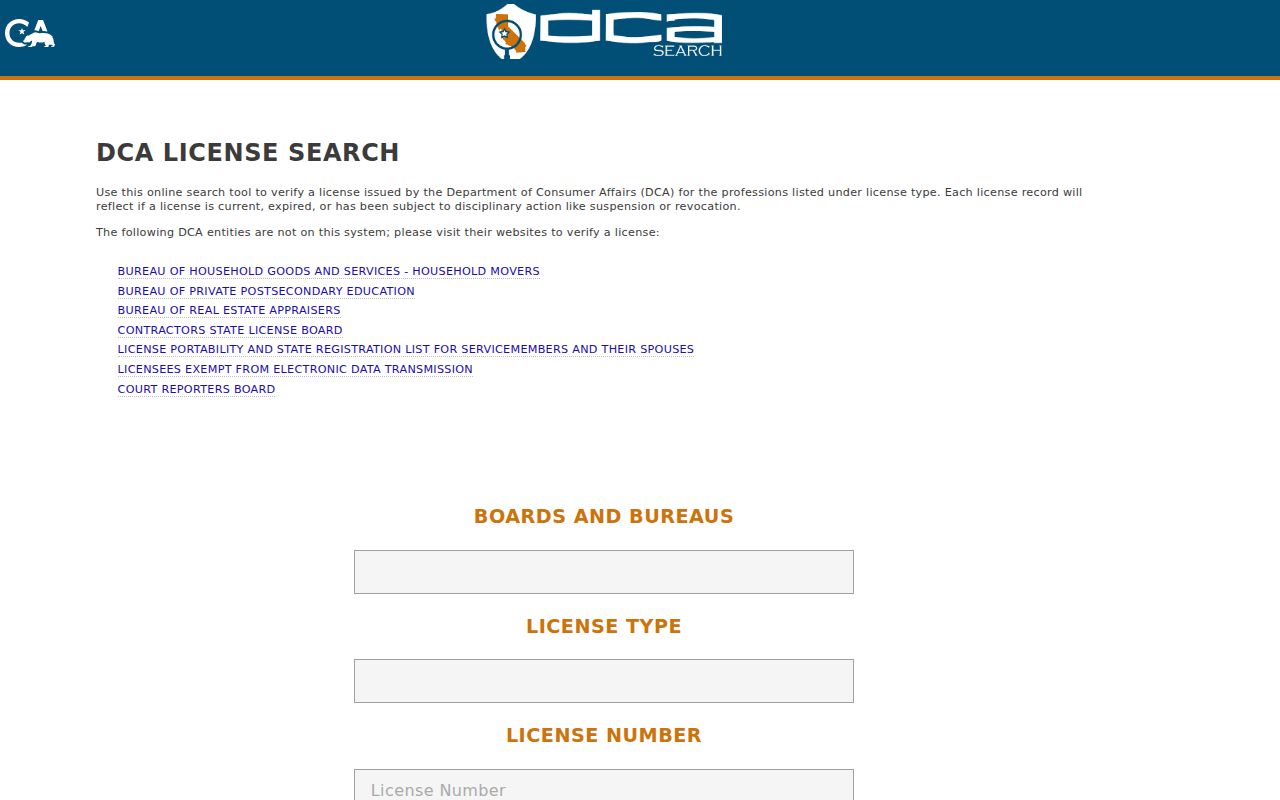
For a company, start with the California Secretary of State bizfile Online search, then compare the filing date and status against city permits or the county business record. The business-search capture below illustrates a public affiliation record.
A business entity result identifies a filing relationship, not a household. Keep the role precise in a resident lookup.
Other official name clues include the county inmate locator, the CDCR locator, Megan's Law, and the State Controller unclaimed-property search. Each is a narrow record with its own use warning. None substitutes for a current resident directory.
Rancho Cucamonga Resident Privacy Limits
Not every resident shows up in a public lookup. That is often deliberate. California's Safe at Home program, built on Government Code §§6205–6216, gives qualifying survivors and other protected groups a substitute mailing address and confidential voter registration. Beyond that shield, whole categories of records simply never become an open residents directory. Elections data, DMV files, utility accounts, private association rosters, and household-member details stay closed. So a missing result in a Rancho Cucamonga resident lookup proves nothing about whether the person lives in the city.
Privacy removal works differently depending on the record. The state's deletion systems can scrub copies held by data brokers, but a broker takedown cannot erase a deed, court record, or other government record that its custodian lawfully holds. Corrections belong with the source office itself. For family history, civic records, reconnection, or plain property curiosity, personal and lawful research through the recorder, assessor, and city directory remains the reliable path.
Respect the boundary. Rancho Cucamonga records may support lawful personal research. Do not use a lookup to stalk, harass, intimidate, or harm anyone, and verify important facts with the custodian.
The Safe at Home program explains why some address records are shielded on purpose, and why a protected non-result can be the right outcome of a search.
Note: A protected non-result reflects privacy protections, not proof that the person is absent from Rancho Cucamonga.